
Home / Still Seeing Rodents After Pest Control
The Sprays Faded. The Entry Points Didn't.
“I paid $400 two months ago. Problem came back in three weeks. Paid again. Still have them.”
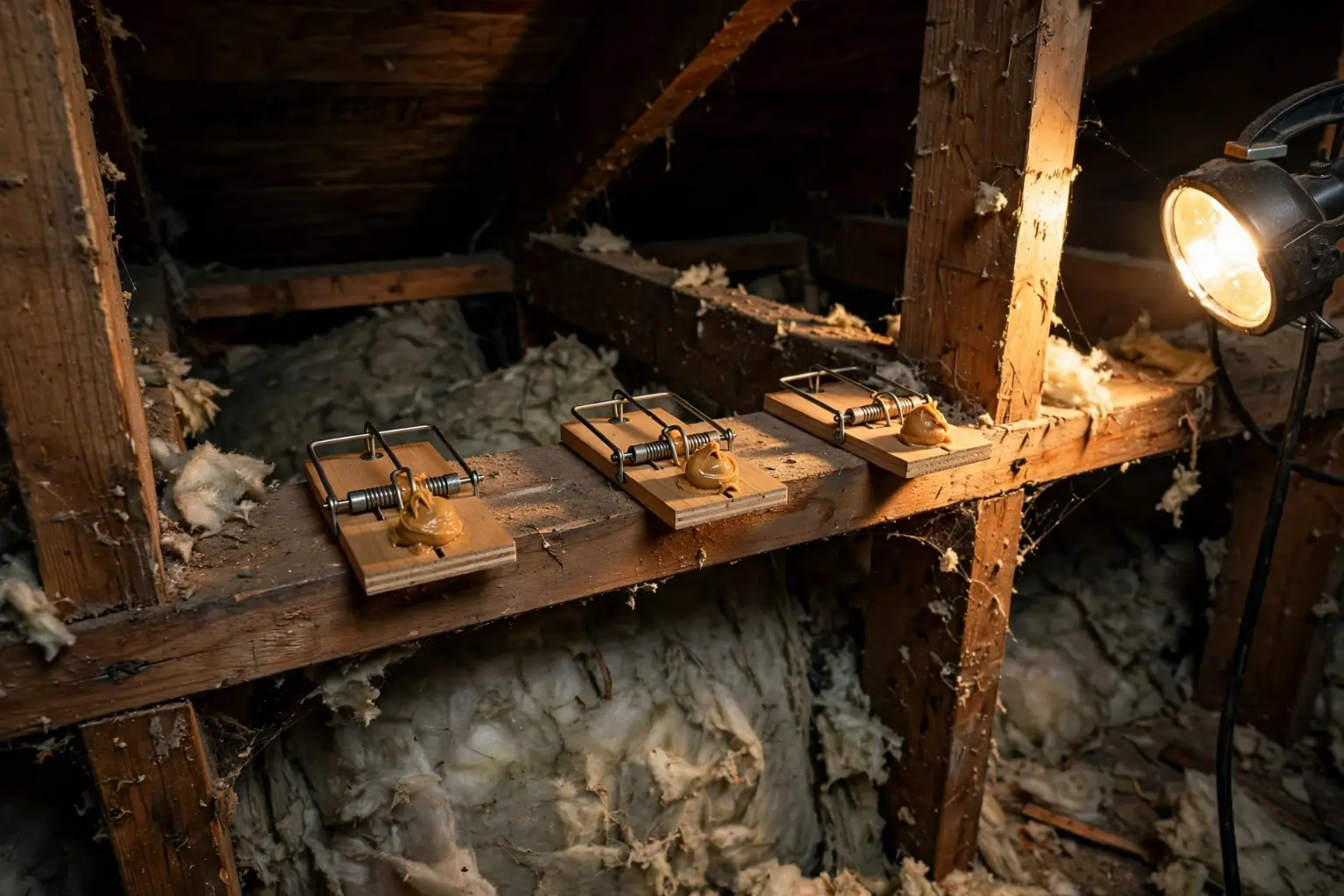
Reason 1: Entry Points Were Never Sealed
This is one of the highest-frustration calls we receive in Hernando County. The homeowner has already spent money. The problem isn’t resolved. They’re trying to understand what happened before they spend more.
Here’s a direct answer to why this happens in Spring Hill specifically.
This is the cause on the majority of re-treatment calls in Spring Hill. The previous company set traps, removed some animals, and left without addressing the entry points.
The open soffit gap, the deteriorated vent screen, the utility penetration with a gap around the conduit, these were still there after the treatment. New animals from the surrounding roof rat population found them within days of the prior population being removed. The problem returned because access was never closed.
This is not necessarily negligence. Some general pest companies genuinely don’t have roofline exclusion in their standard service scope. They handle rodents the same way they handle ants, treatment without structural remediation. For ants, that approach works fine. For roof rats with an open attic access point and a year-round breeding population in Spring Hill, it doesn’t.
Reason 2: Foam Sealing Failed
When a general pest company does attempt exclusion in Hernando County, the most common material used is expanding foam. We find foam-sealed entry points with visible rat teeth marks on re-treatment jobs in Timber Pines, Sterling Hill, and Woodland Waters regularly.
Foam is not a sealing material for Florida’s climate. It degrades in UV exposure and heat, becoming brittle and crumbling within 1 to 2 years. Rats chew through fresh foam within hours, it offers no physical barrier to a determined roof rat. If the previous treatment involved foam sealing, it may have provided a brief deterrent effect before failing.
Reason 3: Inspection Was Not Thorough Enough
The most significant roof rat entry points in Spring Hill, soffit panel gaps at rafter tails, are invisible from the ground. They’re only findable from a ladder with hands on each panel, testing for movement or gap.
If the previous company’s inspection was done from the ground level only, the most common entry points in the county were never found. A partial entry point map leads to partial sealing. Partial sealing leaves open access for replacement animals.
What Re-Treatment Involves in Spring Hill
We handle re-treatment after a failed general pest service the same way we handle a first-time job, with additional documentation of what the previous company did and where it failed.
What’s different:
We specifically look for foam-sealed points and replace them with stainless hardware cloth. We document what was previously done alongside what we find that wasn’t addressed. You get a clear picture of the treatment gap.
We don’t criticize the previous company by name. We tell you what was done, what wasn’t done, and what the scope is to complete the job properly.
Re-treatment pricing: Same as a first-time job. $600 to $950 for most average Spring Hill homes. No surcharge for following up on another company’s incomplete work.
Frequently Asked Questions
Why did my rat problem come back after pest control in Spring Hill?
Almost always one of two reasons: the entry points were never physically sealed (trap-only service left access open), or they were sealed with foam that rats chewed through or that degraded in Florida’s heat. Both leave access open for replacement animals. Stainless hardware cloth exclusion of every entry point is what produces a lasting result.
The pest company sealed my entry points with foam. Is that why the problem came back?
Almost certainly yes. Foam is not a physical barrier, rats chew through fresh foam in hours. Florida’s heat and UV also degrade it within 1 to 2 years regardless of gnawing. We remove and replace foam-sealed points with stainless hardware cloth on re-treatment jobs regularly in Hernando County.
How do I know if my previous treatment actually included exclusion?
Ask for the written report showing which entry points were sealed and what materials were used. If no such document exists, exclusion documentation doesn’t exist. If the answer is “they filled some holes” without specifics, ask to see before-and-after photos. A legitimate exclusion job produces a photo record of every sealed point.