
Home / Roof Rats Signs Entry Points
Noises Up Top? Your Roofline Has a Welcome Mat
The roof rat (Rattus rattus) is the dominant rodent in Spring Hill and throughout Hernando County. If you’re hearing nocturnal sounds in your attic, finding dark raisin-size droppings along your ceiling joists, or noticing an ammonia smell from the ceiling, this is almost certainly the species you’re dealing with.
Signs You Have Roof Rats in Your Spring Hill Home
Nocturnal ceiling sounds
Roof rats are almost entirely nocturnal, active from dusk to approximately 4am, resting in attic insulation during daylight. Light, fast scurrying sounds in your ceiling after dark that stop by sunrise are the most reliable pre-inspection indicator of Rattus rattus specifically.
Droppings profile
Raisin-size, dark brown to black, with pointed ends. Fresh droppings are moist and pliable; old droppings are gray and crumble. Found along attic joists, in insulation compression zones, and along wall edges where travel routes run.
Rub marks on rafters
Roof rats travel the same routes repeatedly, leaving sebum (body oil) stains on the edges of rafters and joists they brush against. These dark, greasy marks are travel route indicators that tell us exactly where to place traps for maximum effectiveness.
Attic ammonia smell
Urine saturation in attic insulation produces an ammonia smell that gets drawn through the HVAC system into the living areas. In Spring Hill’s summer heat, where attic temperatures exceed 130°F, this smell in the living area typically indicates an infestation that’s been active for several weeks.
Entry Points That Roof Rats Use in Spring Hill
Soffit panel gaps
The most common entry point we find on first-time Hernando County inspections. Florida’s heat cycling causes soffit panels to pull away from rafter tails over years. The gap is at the top edge, invisible from below, functional from above for a roof rat on the roofline surface.
Deteriorated roof vent screens
Most Spring Hill homes have multiple roof vents for attic ventilation. Plastic screens become brittle in UV exposure; metal screens rust and lift from frames. A failed vent screen is an immediately usable entry point.
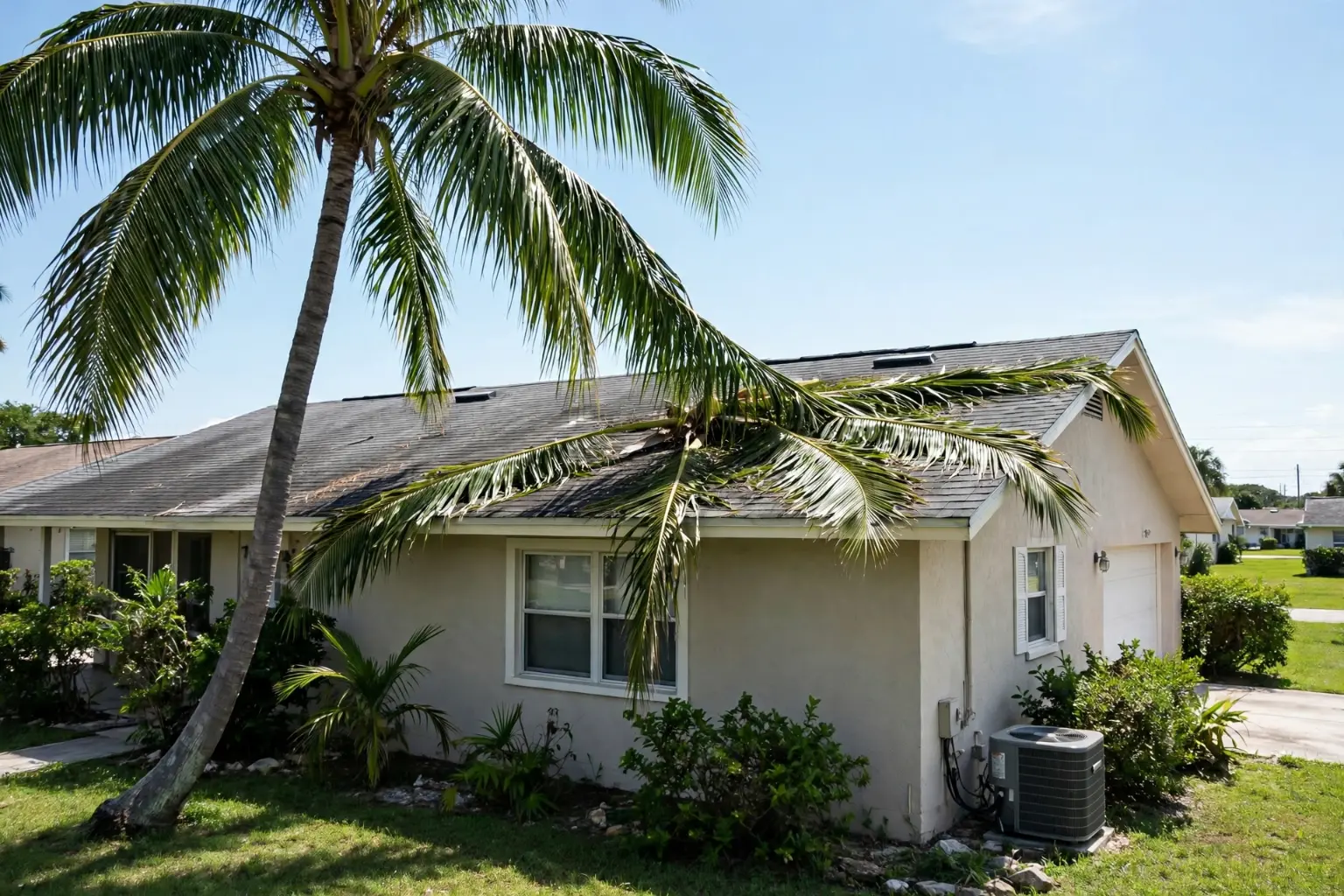
Oak and palm tree canopy
In neighborhoods like Woodland Waters and Timber Pines, mature tree canopy provides direct bridge access to rooflines. A branch within three feet of the soffit edge is an access ramp, no climbing the structure required.
Utility penetrations
HVAC lines, electrical conduit, cable, and plumbing that pass through the roofline are rarely sealed tightly against the structure. Gaps around even small-diameter conduit are sufficient for roof rat entry.
What to Do About Roof Rats in a Spring Hill Home
The sequence that produces a lasting result:
- Full roofline inspection from a ladder, every entry point documented
- Seal all entry points with stainless hardware cloth and metal flashing, not foam
- Place mechanical snap traps on documented travel routes inside the attic
- Return visit at 7 to 10 days to confirm trap clearance and exclusion integrity
- Written photo report documenting every sealed entry point
What doesn’t produce a lasting result: setting traps without exclusion, using foam as sealing material, inspecting from the ground level only.
Frequently Asked Questions
How do roof rats get into Spring Hill attics?
Almost exclusively from the roofline, soffit panel gaps at rafter tails, deteriorated vent screens, fascia board corner gaps, and utility penetrations. They reach the roofline via oak and palm tree canopy in Spring Hill’s heavily wooded neighborhoods. Entry gaps as small as a quarter-inch are sufficient.
How long have roof rats been in my Spring Hill attic if I just heard them?
The timing between entry and detection varies, but hearing consistent nocturnal sounds usually indicates a population, not a single animal, is present. Finding both fresh and old droppings in the same attic zone indicates at least 3 to 4 weeks of activity. Early treatment is significantly less expensive than treatment after a long-running infestation.
Are roof rats dangerous in Spring Hill FL?
Roof rats in Hernando County carry leptospirosis bacteria in their urine, the primary rodent disease risk in Florida. Their attic presence also creates wiring damage risk from continuous gnawing. HEPA cleanup of contaminated attic insulation after removal is the appropriate remediation step for health risk reduction.