
Home / Rat Vs Mouse Droppings How To Tell
Pellets Don't Lie — Here's How to Read Them
The most useful thing about rodent droppings isn’t that they confirm a problem exists, you probably already knew that. It’s that they identify the species, which determines the entry points, the treatment approach, and the cost of solving the problem.
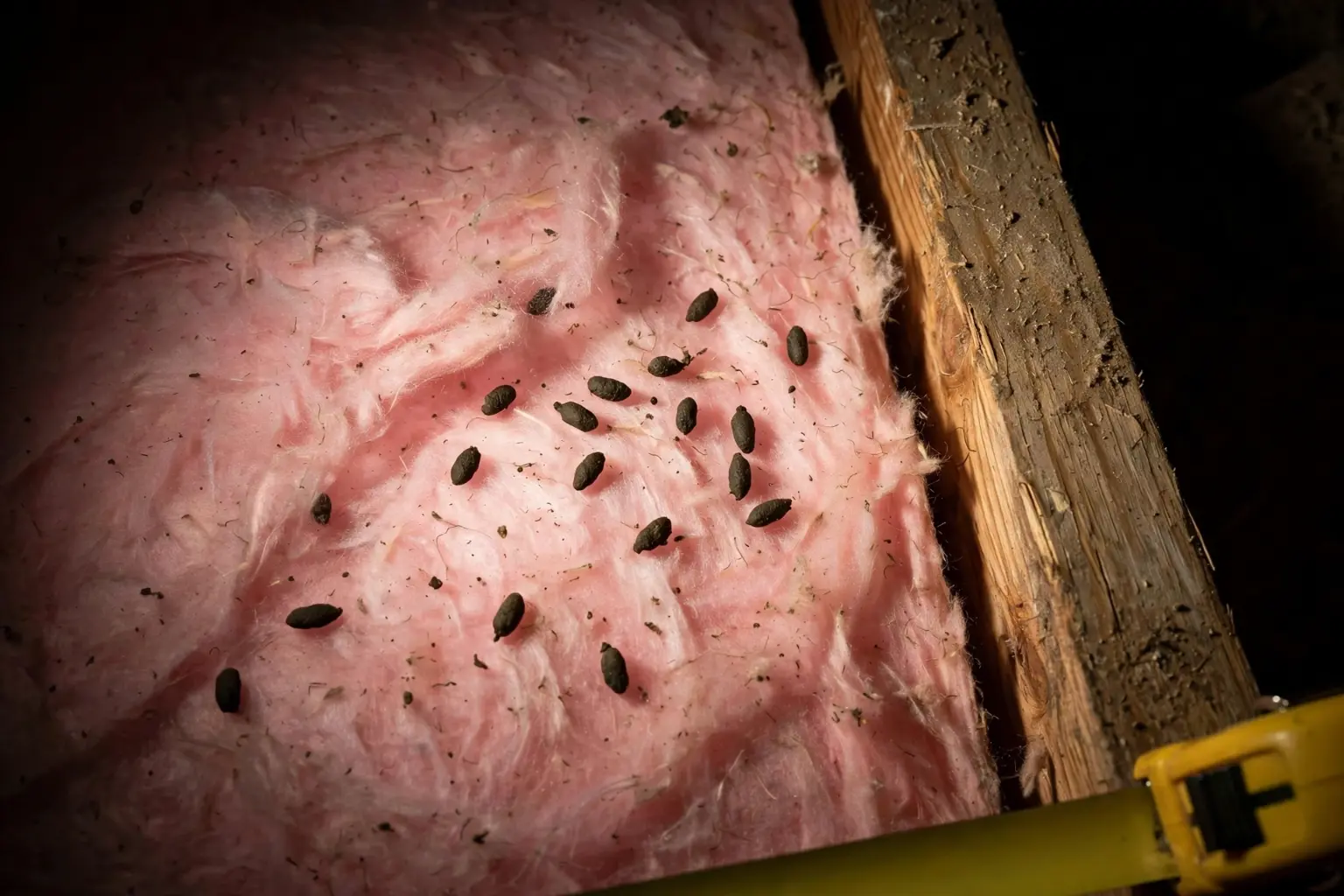
The Key Measurements
Misidentifying species from droppings leads to the wrong treatment. Here’s how to tell them apart accurately.
Roof rat droppings
Size: approximately 1/2 inch, raisin-size. Shape: cylindrical, tapered to a point at both ends. Color: dark brown to black when fresh, gray when old. Texture: smooth surface, moist and pliable when fresh, crumbly when old.
House mouse droppings
Size: 1/4 inch or smaller, rice-grain size. Shape: tapered ends, but significantly smaller than rat droppings. Color: dark brown to black when fresh. Notably smaller, if you’re seeing something that looks like a small rat dropping, it’s likely a mouse dropping, not a young rat.
Norway rat droppings
Size: up to 3/4 inch, larger than roof rat. Shape: capsule-shaped with distinctly blunt, rounded ends, not pointed like roof rat droppings. Color: brown to dark. The blunt ends are the key visual differentiator from roof rat droppings of similar size.
Location Tells You as Much as Size
Location of droppings is often as diagnostic as the droppings themselves.
Attic, along joists, in insulation → Roof rat. This is their nesting and travel environment in Spring Hill homes.
Kitchen cabinets, pantry shelves, behind appliances → House mouse. They stay at kitchen and wall void level, not in attics.
Ground level near foundation, garage floor, crawl space → Norway rat. Ground-level burrowing species, concentrated near water in Hernando County.
Both attic and kitchen → You may have both. Roof rat attic infestation and kitchen house mouse infestation can coexist independently in the same home.
Fresh vs Old: What Age Tells You
Fresh droppings (active infestation): dark colored, moist, slightly pliable when pressed gently. Found in current activity zones.
Old droppings (past or previous infestation): gray or faded, dry, crumble easily when touched. May indicate past activity that has since resolved, or may coexist with fresh droppings indicating a long-running current infestation.
Finding both fresh and old droppings in the same location tells you the infestation has been active for weeks to months, not a recent entry. This is important for cleanup scope estimation: a long-running infestation means more attic contamination and a larger remediation scope than a recent one.
Safe Droppings Handling
Never dry sweep or use a standard vacuum on rodent droppings.
Dry droppings disturbed in an enclosed space, a kitchen cabinet, a pantry shelf, an attic, become aerosolized. Fine particles become airborne. In Spring Hill, where leptospirosis from roof rat urine is the primary rodent disease risk, aerosolized droppings create an inhalation exposure route.
Safe protocol: nitrile gloves, N95 respirator, dampen with 10% bleach solution or enzyme spray, 5-minute contact time, remove with paper towels into a sealed bag.
Frequently Asked Questions
What do roof rat droppings look like vs house mouse droppings?
Roof rat droppings are raisin-size (1/2 inch) with pointed ends, found in attics. House mouse droppings are rice-grain size (1/4 inch) with tapered ends, found in kitchen cabinets and pantry areas. The size difference is significant, if you can see it clearly and it’s raisin-size, it’s a rat dropping. Rice-grain size is house mouse.
I found droppings in my Spring Hill kitchen cabinet. Rat or mouse?
Kitchen cabinet droppings at counter and shelf level are almost always house mouse. Roof rats primarily infest attics and ceiling spaces in Spring Hill, they’re not typically the species found in kitchen cabinets. House mouse is the expected species for evidence found inside cabinet interiors, pantry areas, or behind kitchen appliances.
How do I know if the droppings are from a current infestation?
Fresh droppings are dark, moist, and slightly pliable, active infestation. Old droppings are gray, dry, and crumble. If you cleaned the area and new dark fresh droppings appeared within 48 hours, the infestation is currently active. If the area stayed clean for 3 weeks, it may have been a transient event, though an inspection is the only way to confirm.