
Home / Hurricane Damage Rodent Entry
Storm Damage Opens Doors Rats Walk Right Through
Hurricane Idalia came through Hernando County in August 2023. Tropical Storm Debby in 2024. Every significant storm that tracks through or near the Nature Coast has the potential to open rodent entry points on Spring Hill homes, including homes that were properly sealed before the storm.
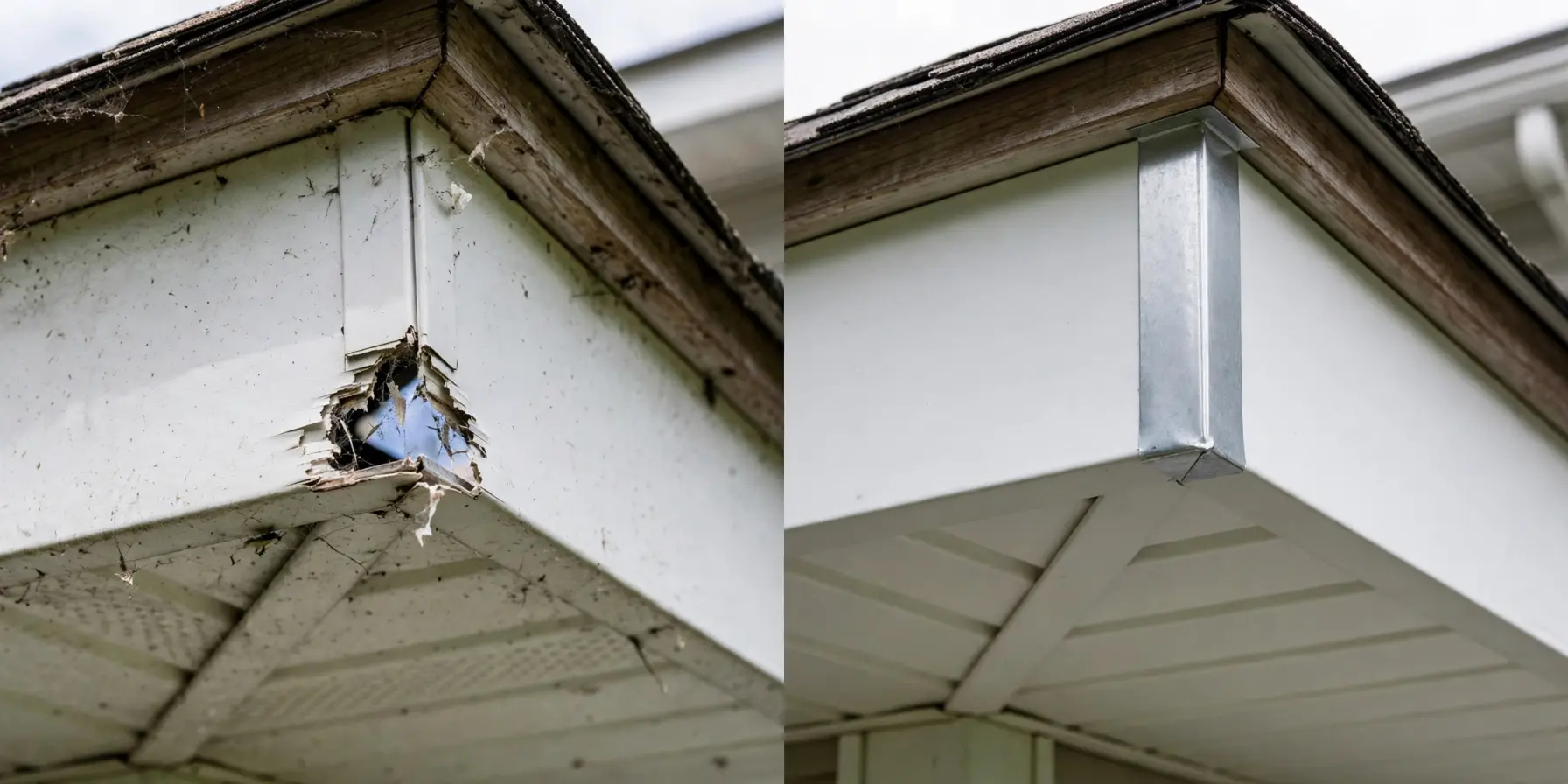
The Most Common Storm-Created Entry Points
Roof rats find new openings within 24 to 48 hours of them appearing. A soffit gap that opened on a Tuesday night can have an animal exploring it by Thursday morning in Woodland Waters or Timber Pines, where active roof rat populations run rooflines nightly.
Here’s what to check on your home within two weeks of any significant storm.
Soffit panel lifting
Hurricane-force wind creates pressure differentials across the roofline that can lift soffit panels away from rafter tails, even on homes with well-fastened panels. A panel that was tight before the storm may have a half-inch gap at the top edge afterward. Invisible from the ground. Visible from a ladder position with hands on the panel. This is the most common storm-created entry point we find in Spring Hill after hurricane events.
Roof vent displacement
Roof vent covers, particularly on older homes in Timber Pines and Brookridge where the covers are original plastic or corroded metal, can be displaced or cracked by debris impact. A displaced vent screen is an immediately usable roof rat entry.
Fascia cracking at corners
Wind and debris impact crack fascia boards at corner returns or separate them from the roofline at the top edge. This exposes the wall cavity and attic space directly.
AC chase weather cap displacement
The weather cap covering the refrigerant line entry at the roofline, often friction-fitted rather than fastened, can be displaced entirely by hurricane-force gusts. An open AC chase is one of the larger-profile openings that roof rats will find quickly.
Previously sealed points
Stainless hardware cloth from prior exclusion work is hurricane-resistant, but not immune to direct debris impact from a large falling limb. Confirming previously sealed points are still intact is part of the post-storm check.
The Two-Week Inspection Window
Timing matters for two reasons.
Colonization window: Roof rats find new openings within 24 to 48 hours. The two-week period after a storm is roughly when a discovered entry goes from “being explored” to “a population has established a nesting site and begun reproducing inside.” Inspection and sealing before the two-week mark is significantly less costly than treating an established infestation after it.
Insurance documentation: If storm-created entry points qualify as wind damage under your homeowner’s policy, the post-storm inspection report documents the damage for an insurance claim. Waiting more than two weeks to inspect reduces the clarity of the damage documentation for insurance purposes.
What the Post-Storm Inspection Covers
Full roofline walk with attention to the specific storm-damage patterns, soffit panel lifting at rafter tails, vent cover condition, fascia board integrity at corners, AC chase weather cap status. Previously sealed points confirmed intact. Ground-level inspection for any debris that may have displaced foundation-level screens.
Every finding is photographed. Wind-damage findings are documented with enough specificity to support an insurance inquiry. Entry points found are sealed in the same visit with stainless hardware cloth.
Frequently Asked Questions
How quickly do rats find storm-created entry points in Spring Hill?
In canopy-connected Spring Hill neighborhoods like Woodland Waters, Timber Pines, and the Weeki Wachee corridor, roof rats investigate rooflines nightly. A new soffit gap created during a storm on Tuesday can have an animal exploring it by Thursday. The June through October window, when both rainy season and hurricane season overlap, is when storm-created openings get exploited fastest.
Does insurance cover rodent exclusion after a hurricane in Hernando County?
The exclusion work itself typically isn’t covered as pest control. But if entry points were created by wind damage to soffits, vent covers, or fascia boards, the repair of that wind damage, which includes the exclusion, may fall under dwelling coverage for wind damage. Our post-storm report documents damage specifically for insurance submission.
Should I inspect my home after every storm in Spring Hill?
After any storm that produced sustained winds above 45 mph in Hernando County, yes. Named hurricanes and tropical storms are obvious triggers. Severe overnight squall lines during rainy season can also produce localized damage sufficient to create new entry points. A brief post-storm roofline check is far less expensive than treating an infestation that established through a storm-created opening.