
Home / Do Palm Trees Attract Roof Rats
That Beautiful Palm Is a Ladder to Your Roof
Yes, directly, and this is one of the most Spring Hill-specific aspects of the roof rat problem in Hernando County. In neighborhoods across the country, roof rats still face the challenge of reaching a roofline from the ground. In Spring Hill’s heavily canopied neighborhoods, that challenge is largely eliminated by the tree canopy itself.
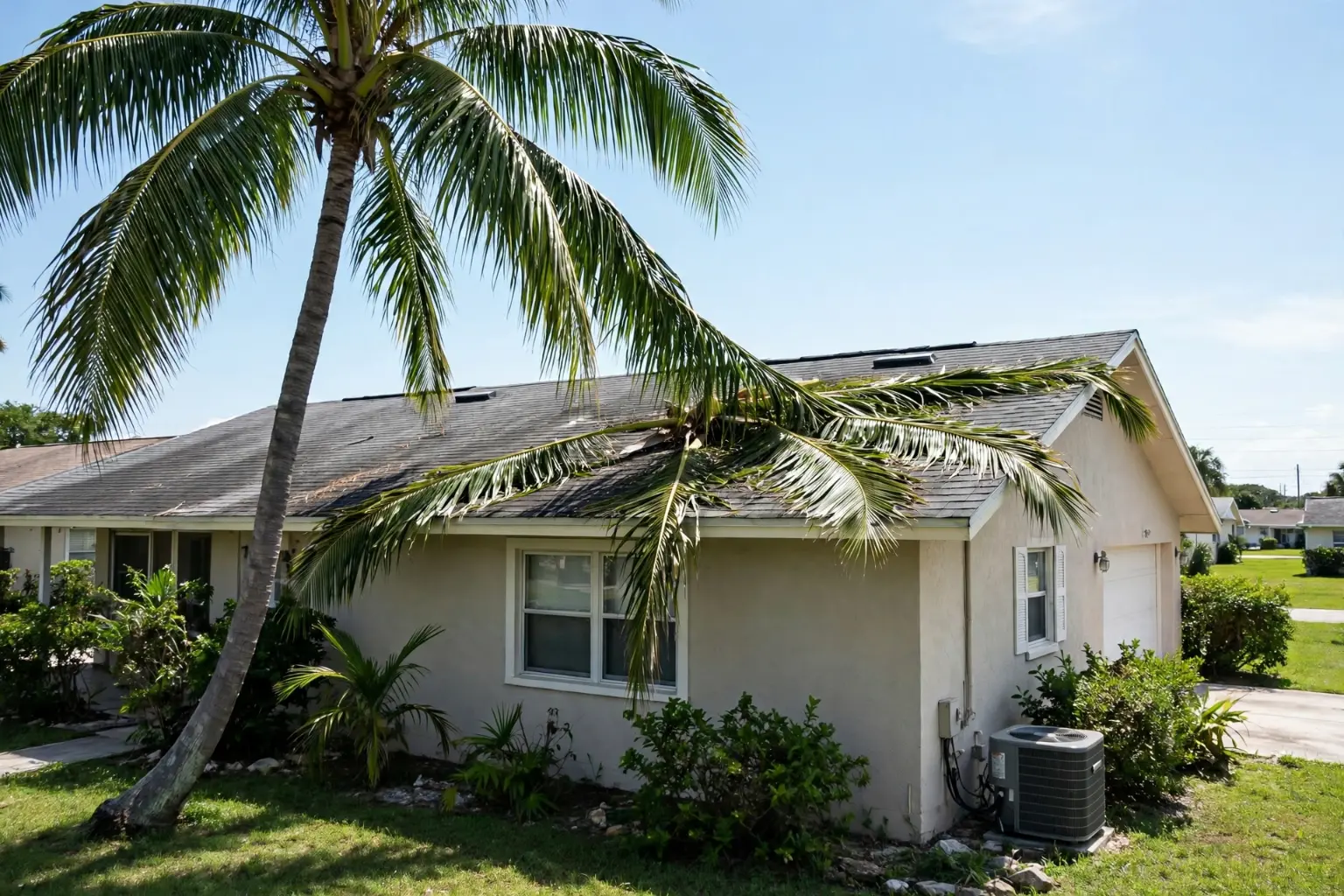
How Roof Rats Use Tree Canopy in Spring Hill
Roof rats (Rattus rattus) are exceptional climbers, they run along utility lines, fence tops, and tree branches as easily as they run on the ground. A branch that extends to within three to four feet of your roofline is a functional bridge. Roof rats can jump approximately four feet horizontally from a launch point at height, and they use this ability continuously as part of normal territory investigation behavior.
In Woodland Waters and Timber Pines, Spring Hill’s most heavily canopied neighborhoods, mature oak trees connect rooflines across multiple adjacent properties. A roof rat doesn’t need to descend from one property’s trees to the ground and climb another property’s structure. It travels the canopy continuously, investigating every roofline within reach.
This is why infestations in these neighborhoods have a cluster pattern. When one home in a canopy-connected block is treated and sealed, the population that was using that home’s attic redirects toward the next accessible roofline in the same canopy network.
Palm Trees: Different Than Oaks, Same Problem
Palms don’t form the same canopy network that oaks do in Spring Hill. They don’t have the horizontal branch spread of mature oaks. But the fronds of a mature Sabal palm, Florida’s state tree, common throughout Spring Hill, extend several feet from the trunk, and a palm trunk itself is a rat highway.
Roof rats climb palm trunks regularly. The rough fibrous texture of palm bark provides good grip, and the fronds at the top give them a launch point toward any roofline within jumping distance. Tightly clustered palms near a structure, or palms whose fronds overhang the roofline, are direct entry routes.
Does Tree Trimming Solve the Problem?
Tree trimming reduces canopy bridge access, but it doesn’t seal the entry points that are already open. And in Spring Hill’s canopy-connected neighborhoods, trimming one tree on your property doesn’t disconnect your roofline from the network if adjacent properties have untrimmed branches.
Trimming is a useful supplementary measure. But it’s not a substitute for identifying and sealing every open entry point on the roofline. A roof rat that can no longer bridge from the tree to the soffit gap will investigate the roofline by climbing up the downspout or drainpipe instead. The gap still needs to be sealed.
What This Means for Spring Hill Homeowners
If you live in Woodland Waters, Timber Pines, or any heavily canopied Spring Hill neighborhood:
The canopy bridge is a year-round access mechanism. Branches within three to four feet of any roofline surface, soffit edges, vent covers, fascia corners, are active bridge routes that roof rats in your neighborhood are using nightly. Entry point exclusion is more urgently important in canopy-connected neighborhoods than in less-wooded parts of the county.
If you have palms or oaks near your roofline:
Trim branches to at least four feet of clearance from any roofline surface. Then inspect and seal any existing roofline entry points, because trimming alone doesn’t close the gap that was already there.
Frequently Asked Questions
Do palm trees attract rats to homes in Spring Hill FL?
Palm trees provide roof rats with a climbing route to rooflines, roof rats climb palm trunks and use fronds as launch points toward soffit edges and vent covers within jumping distance. They don’t attract rats directly, but they eliminate one of the few obstacles between the ground population and your attic.
How far should tree branches be from my roofline to prevent rats?
At least four feet of clearance between any branch tip and any roofline surface, soffit edge, vent cover, fascia board. Roof rats jump approximately four feet horizontally from a launch point at height. Less than four feet of clearance is a functional bridge route in Spring Hill’s active roof rat environment.
Does trimming my oak tree prevent roof rats from getting into my Spring Hill attic?
Trimming reduces canopy bridge access but doesn’t seal the entry points already on your roofline. In Woodland Waters and Timber Pines, adjacent properties’ untrimmed trees maintain the canopy network even if your property is trimmed. Trimming plus complete roofline exclusion is the combination that works. Trimming alone provides limited protection.