
Home / Does Having Rats Mean Dirty House
Clean House, Still Rats? It's Not Your Fault
No. And this question, which comes up on almost every first call from a Spring Hill homeowner who hasn’t called a pest company before, deserves a direct answer before anything else.
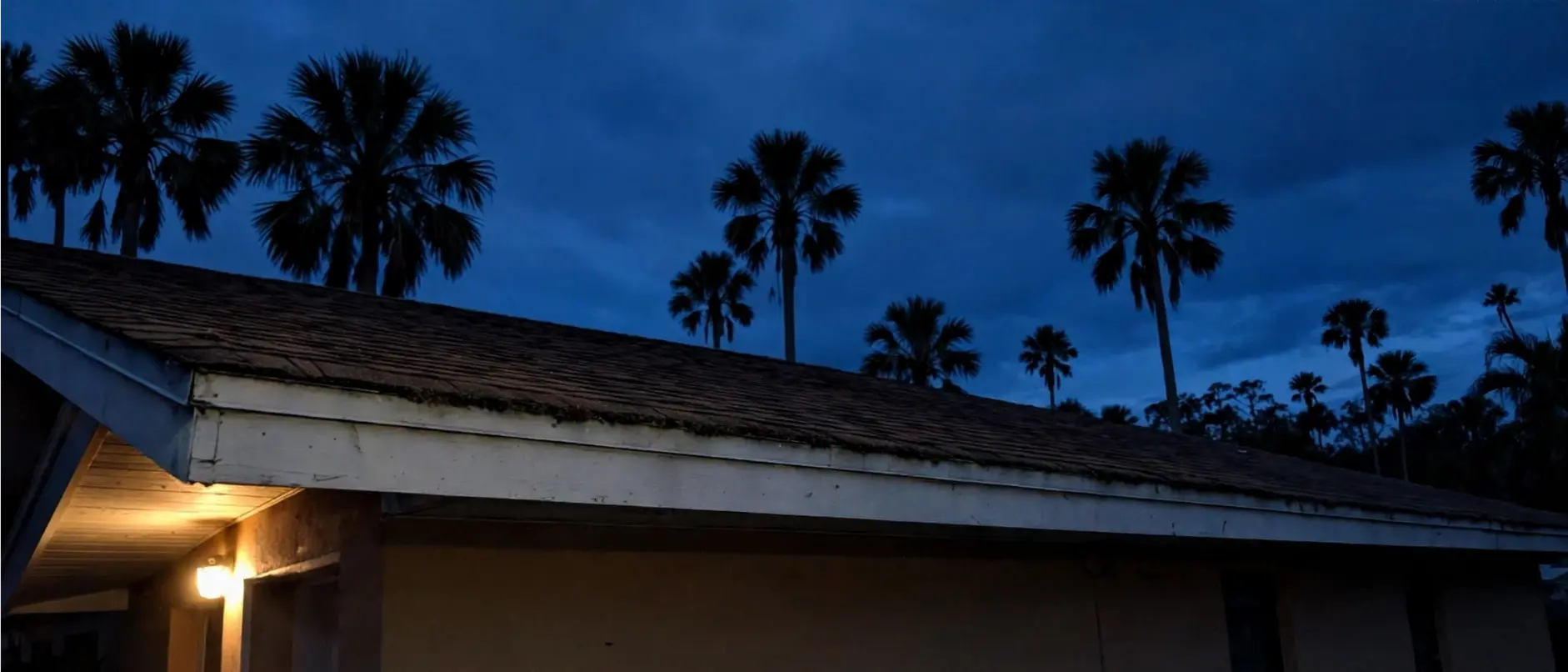
What Roof Rats Actually Look For
We’ve done exclusion work on immaculately maintained homes in Timber Pines. We’ve inspected Hernando Beach properties where the owner is a retired engineer who’s kept the home in better condition than most new construction. We’ve been to Woodland Waters homes where the kitchen is cleaner than our inspection van.
They all had roof rats in the attic. The common factor was a soffit gap and an oak tree within reach of the roofline, not the cleanliness of the home.
Roof rats in Spring Hill choose structures based on three factors: access, shelter, and proximity to food. In order of importance, access is first.
A gap in a soffit panel, a deteriorated vent screen, an unsealed utility penetration, these are construction and material aging issues, not lifestyle indicators. The roof rat that enters through a 40-year-old vinyl soffit panel in Timber Pines isn’t responding to anything about how the home is kept. It’s responding to the presence of an opening in an otherwise attractive shelter environment.
Florida’s subtropical climate, Spring Hill’s mature oak canopy, and the aging housing stock in many Hernando County neighborhoods, these are the actual drivers. Not the dishes in the sink.
The Delay That Embarrassment Causes
The reason this matters in practice: embarrassment about having a rodent problem causes homeowners to delay calling. And in Spring Hill’s year-round breeding climate, every week of delay means:
- A larger attic population (roof rats produce litters on a 6-week cycle year-round)
- More attic contamination (more droppings accumulation, more urine saturation in insulation)
- Longer wiring exposure (more gnawing opportunity on electrical runs)
- A larger and more expensive cleanup scope when treatment finally happens
The homeowner who calls us in week two of hearing sounds gets a HEPA spot-clean after treatment. The homeowner who waits three months because they were embarrassed to call gets an attic remediation conversation about insulation replacement.
What Actually Attracts Roof Rats in Spring Hill
If you’re looking for something you could have done differently: none of these are lifestyle factors.
The oak tree. Mature oaks in Woodland Waters, Timber Pines, and across Spring Hill are the primary bridge access to rooflines. A branch within three feet of your soffit, not a dirty pantry, is the route by which most Spring Hill roof rats reach your attic.
The aging soffit. A vinyl soffit panel that has been through 30 Florida summers develops gaps at the rafter tail edge. That gap is the entry. Keeping the home immaculately is irrelevant if the gap exists.
The rainy season. Every June, outdoor burrows flood and displaced rats move toward the nearest accessible structure. It doesn’t matter how clean the home is, if the entry point is open on June 1st, the seasonal surge will find it.
Frequently Asked Questions
Does a rat infestation in Spring Hill mean my home is dirty?
No. Roof rats in Hernando County choose homes based on access, soffit gaps, deteriorated vent screens, tree canopy bridge routes, not cleanliness. We inspect immaculate homes in Timber Pines and Hernando Beach regularly with active roof rat infestations. The entry point is a construction aging issue, not a lifestyle one.
What actually attracts rats to a Spring Hill home?
An accessible entry point on the roofline, typically amplified by tree canopy within reach of the soffit. The June rainy season surge adds population displacement pressure. Food sources inside the home are secondary factors, a sealed home with no external access doesn’t get roof rats regardless of what’s in the pantry.
I was embarrassed to call earlier. Does waiting make the problem worse?
Yes, in Spring Hill’s year-round breeding climate, every additional week means a larger attic population, more insulation contamination, and more wiring exposure time. The homeowner who calls in week two gets a different (cheaper, simpler) cleanup scope than the homeowner who waited three months. There’s no benefit to waiting.