Home / Rat Removal
Roof Rats Climb, Norway Rats Dig — We Stop Both
When Spring Hill homeowners call about a rat problem, they’re almost always dealing with one of two species, and those two species behave so differently that treating for one when you have the other is one of the main reasons rat removal fails and the problem comes back.
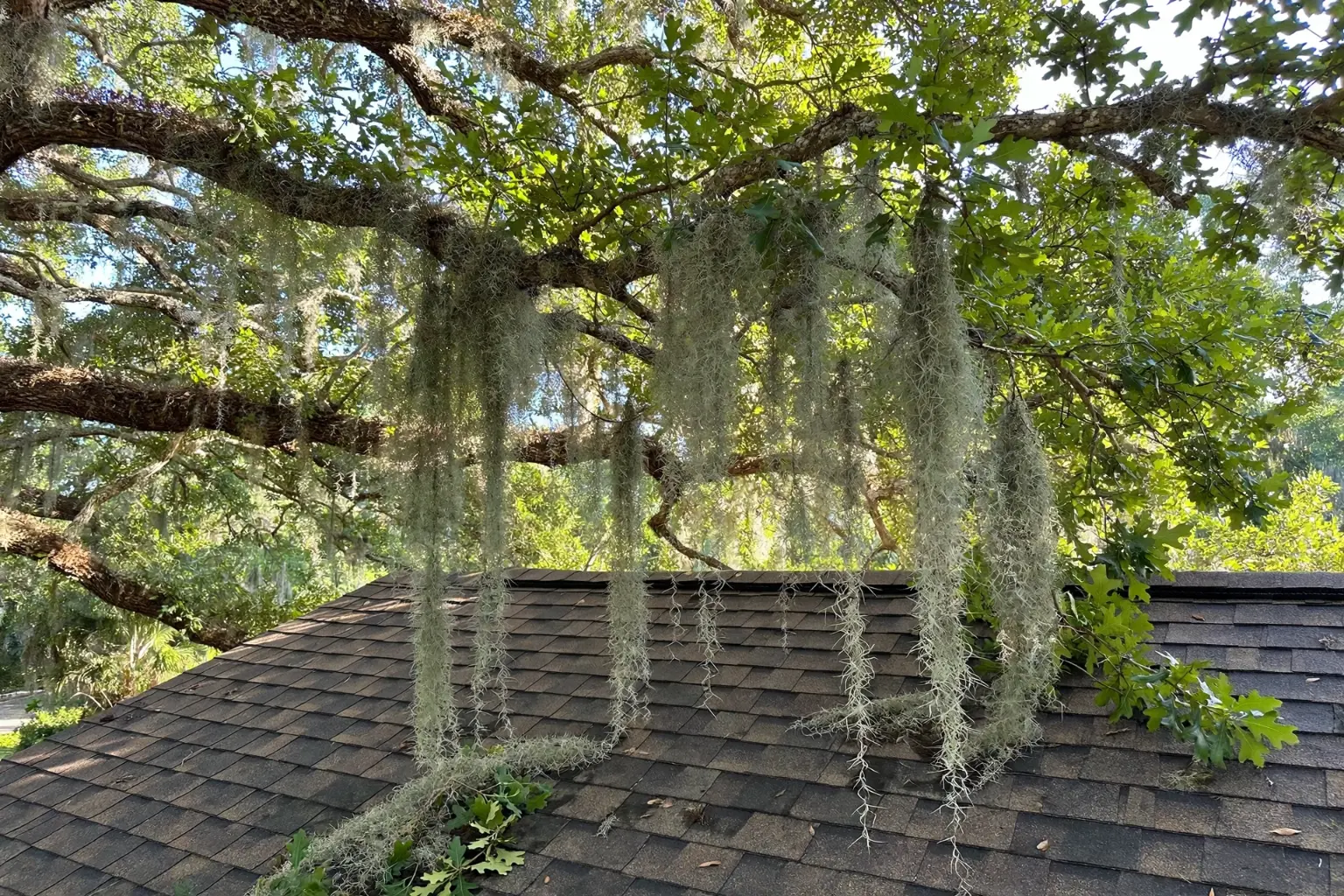
The roof rat (Rattus rattus) is by far the most common in Hernando County. It’s an agile, lightweight climber that lives above ground, in attics, wall voids, and the spaces between your ceiling and your roof deck. It moves along rooflines, through tree canopies, and across fence tops. The mature oak trees in Woodland Waters and Timber Pines give roof rats a direct bridge from the ground to your roofline, and they use it regularly.
The Norway rat (Rattus norvegicus) is heavier and slower. It burrows at ground level, under slabs, near AC units, along foundation edges. In Spring Hill, Norway rats show up most often near water: Hernando Beach, drainage areas along low-lying properties, and wooded lots near the Weeki Wachee River corridor. If your rat sounds are at ground level rather than in the ceiling, Norway rat is the more likely candidate.
Two Different Rats: Two Different Problems
| Roof Rat (Rattus rattus) | Norway Rat (Rattus norvegicus) | |
|---|---|---|
| Body | Slim, dark brown to black, 13–18″ with tail | Heavy, brown, blunt nose, 16–20″ with tail |
| Activity | Strictly nocturnal, dusk to 4am | Dusk and dawn, some daytime |
| Lives | Attics, soffits, wall voids, trees | Burrows at ground level |
| Enters from | Roofline, soffits, vents, fascia | Foundation, weep holes, slab gaps |
| Droppings | Raisin-size, pointed ends, dark | Capsule-shaped, blunt ends, larger |
| Breeding | 4–6 litters/year in FL climate | 5–7 litters/year in FL climate |
| Common in | Woodland Waters, Timber Pines, Sterling Hill | Hernando Beach, drainage corridors |
Wondering which rat you have? Timing is your first clue. If you’re hearing sounds in your ceiling exclusively after dark, starting around dusk and stopping before sunrise, roof rat is the strong probability. If sounds are at ground level, near the garage slab or under the house, and happen in early morning as well as evening, Norway rat is more likely. Droppings confirm the species on the first inspection.
Why Roof Rats Are So Common in Spring Hill
Spring Hill sits in the heart of Hernando County’s Nature Coast, heavily wooded, with older neighborhoods that have mature oak and palm canopy connecting property after property. Timber Pines, Woodland Waters, Silverthorn near Brooksville, these are the neighborhoods where roof rat pressure is highest, because the tree canopy gives them continuous above-ground travel routes between structures.
Florida’s subtropical climate removes the one factor that controls roof rat populations in most of the country: winter. In Hernando County, roof rats breed and stay active every month of the year. A pair that establishes a nest in your attic in October doesn’t slow down in December. By February, that pair may have produced one or two full litters. By June, when the rainy season begins pushing additional rats indoors from flooded outdoor burrows, a small attic population can become a significant one very quickly.
The homes most vulnerable in Spring Hill are those built in the 1980s and 1990s, when soffit and fascia materials were standard wood and vinyl that have now had three to four decades of Florida heat, humidity, and storm exposure. Gaps that weren’t there when the home was built have opened up over time. A roof rat doesn’t need much, a quarter-size hole is enough for a full-grown animal to enter.
Where Rats Get Into Spring Hill Homes
Every rat removal job starts with a full roofline inspection. Not a quick look from the ground, we walk the perimeter, check every soffit panel by hand, and look at every vent cover, utility penetration, and fascia return. These are the entry points we find most often:
Soffit Gaps
Florida’s heat causes soffit material to expand and contract seasonally. Over years, panels pull away from rafter tails leaving gaps at the top edge, invisible from ground level but large enough for a roof rat to enter within seconds.
Roof Vent Screens
Plastic vent screens deteriorate in UV exposure. Metal screens rust and pull away from frames. Most Spring Hill homes have at least one vent where the screen has failed. These are primary entry points for roof rats already on the roofline.
Utility Penetrations
Electrical, cable, plumbing, and HVAC lines that enter through the roofline are rarely sealed tightly enough. The gap around a 3/4-inch conduit can be enough for a mouse, and larger pipe penetrations are straightforward roof rat entries.
Fascia Board Gaps
At the corners where fascia boards meet, particularly at roof returns on hip roofs common in Spring Hill, gaps develop over time. Hurricane-force winds also lift fascia sections, leaving openings that stay open until someone specifically checks for them.
Foundation Weep Holes (Norway Rats)
Block-construction homes common in Hernando County have weep holes in the foundation, small openings designed for drainage. Norway rats enter through these at ground level and can access the sub-floor or crawl space cavity.
AC Chase Penetrations
Where the air conditioning lines enter the structure, particularly at the roofline where the refrigerant lines and drain line pass through, gaps are almost universal. This is a frequently missed entry point on general pest inspections.
The oak tree problem in Spring Hill: A tree branch within three feet of your roofline is a rat highway. Roof rats jump up to four feet horizontally. The mature oaks in Woodland Waters, the palms in Timber Pines, and the dense landscaping on many Hernando County lots give roof rats direct roofline access that has nothing to do with how well your home is sealed. Tree trimming reduces pressure, but it doesn’t replace sealing the entry points that are already open.
Signs You Have Rats: Not Mice, Not Squirrels
Misidentification is one of the most common and costly mistakes. Treating a roof rat infestation with mouse-targeted products, or calling a squirrel company when you have rats, means the problem continues and you’re out the cost of the first treatment.
Signs that point specifically to roof rats:
- Scratching, scurrying, or running sounds in your ceiling or attic that start at dusk and stop by early morning, roof rats are nocturnal, and this timing is reliable
- Raisin-size droppings with pointed ends, dark brown to black, typically found along wall edges, in attic insulation, and in cabinet corners
- Greasy rub marks (sebum stains) along joists, rafters, and wall edges where rats travel the same routes repeatedly
- Nesting material in attic insulation, compressed insulation pulled into balls, shredded paper or fabric tucked into corners
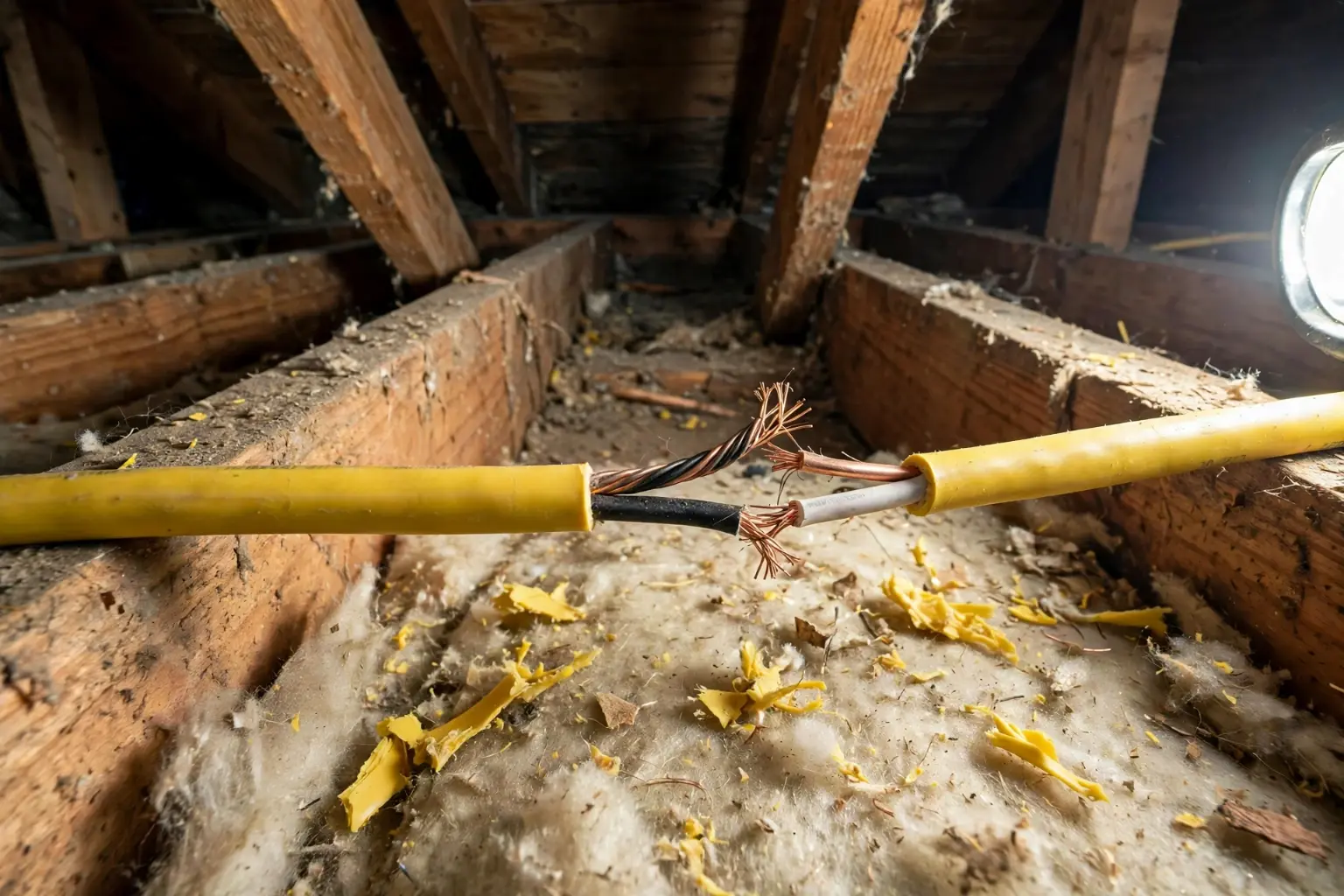
- Gnaw marks on electrical wiring insulation, wood framing, or PVC pipe in the attic
- An ammonia smell from the attic, particularly when the HVAC is running, urine saturation in insulation indicates an established infestation
How long have they been there? Fresh rat droppings are dark, moist, and slightly pliable. Old droppings are gray, dry, and crumble when touched. Finding both fresh and old droppings in the same area tells us the infestation has been active for a significant period, not a recent entry. This matters for treatment scope and for understanding whether attic cleanup is going to be needed.
How We Handle Rat Removal in Spring Hill
The sequence matters. Companies that skip straight to trapping without completing exclusion first create a vacancy that new rats fill within days.
Step 1: Full inspection: roofline, attic, ground level
We walk your entire roofline and check every soffit panel, vent cover, utility penetration, and fascia board by hand. In the attic, we document active areas, entry points visible from inside, and any wiring or insulation damage. Every entry point is photographed and rated by severity. You see what we find.
Step 2: Written estimate before any work begins
You get an itemized quote showing the exclusion scope, materials, and total cost. No surprises. Inspection fee credited toward approved work.
Step 3: Exclusion first: seal every entry point
We seal every confirmed entry point using stainless steel hardware cloth, metal flashing, and fitted vent guards. We do not use foam, foam deteriorates in Florida’s heat and humidity, and rats chew through it within weeks. This is the step that actually solves the problem.
Step 4: Mechanical trapping inside active areas
After sealing, we place mechanical snap traps in the attic and any other confirmed active areas. No broadcast poison bait inside living areas. Trap placement is based on documented travel routes, rub marks and compressed insulation trails, not guesswork.
Step 5: Return visit: clearance and confirmation
We return within 7 to 10 days to clear traps and confirm activity has stopped. Photo report delivered documenting every sealed entry point with before-and-after photos.
Step 6: 90-day return protection
If rats return within 90 days of our exclusion work, we come back at no charge. No exceptions, no fine print.
Why Poison Bait Creates a Bigger Problem
One of the most frequent calls we receive in Spring Hill goes like this: “I smell something awful coming from the wall. I used bait stations a few weeks ago and now there’s a dead rat somewhere I can’t find.”
Rodenticide bait causes rats to leave their nesting area to find water, which often means they die inside a wall void or deep in attic insulation. In a Spring Hill attic, where summer temperatures regularly exceed 130°F, that decomposition accelerates dramatically. The odor can last weeks. Locating the carcass inside a wall void often requires cutting into drywall.
We use mechanical trapping only inside structures. The traps catch the animal in a location we can access and remove. No odor problem. No secondary poisoning risk for pets. If you’ve already used bait and now have a dead-rat smell situation, we handle that too, but the sequence that prevents it starts with exclusion and mechanical trapping.
Rat Removal Across Spring Hill Neighborhoods
Timber Pines and Brookridge (34608, 34613)
Older 55+ communities with mature oak canopy and construction from the 1970s–1990s. Soffit and fascia material from that era has had decades of Florida weather exposure. Roof rat pressure is consistently high here, and multiple entry points are typical on the first inspection.
Woodland Waters (34609)
The most heavily wooded subdivision in Spring Hill. Dense oak canopy connects rooflines across multiple properties. Roof rat activity here is higher than almost anywhere else we serve, and when one home in a cluster is treated, displaced animals look for the next available entry point nearby.
Hernando Beach (34607)
Coastal salt air accelerates soffit and vent material deterioration faster than inland areas. Norway rat pressure near the water adds a ground-level dimension that roofline-focused treatments miss entirely. This ZIP requires a full exterior inspection, not just a roofline check.
Sterling Hill (34609)
Predominantly 1990s–2000s construction, generally in better condition than older neighborhoods, but utility penetrations and garage wall gaps are the most common entry points. Families with children and pets in this area are the primary caller profile.
Rat Removal Spring Hill FL
How do roof rats get into Spring Hill attics?
Roof rats in Spring Hill enter almost exclusively from the roofline. The most common entry points are soffit panel gaps that have opened up over years of Florida heat expansion, deteriorated roof vent screens, openings around utility penetrations, electrical, cable, HVAC lines, and fascia board gaps at eave corners. They reach the roofline by climbing oak and palm trees. A branch within three feet of your roofline is enough. A hole the size of a quarter is sufficient for entry, which is why many gaps go unnoticed until someone specifically walks the roofline looking for them.
Can roof rats get into Spring Hill homes from palm trees?
Yes. Roof rats use palm fronds, oak branches, fence tops, and any vegetation within reach of your roofline as a bridge to soffits and roof vents. They’re capable of jumping approximately four feet horizontally. Trimming branches away from the roofline reduces pressure but doesn’t replace sealing the physical entry points that are already open.
How long does rat removal take in Spring Hill?
Most rat removal jobs in Spring Hill require two visits over one to two weeks. The first visit covers the inspection, exclusion work, and trap placement. The return visit, typically 7 to 10 days later, clears traps, confirms no new activity, and delivers the written photo report. The 90-day protection period begins after the exclusion work is completed.
Do rats leave on their own in Florida?
No, and in Florida this misconception is particularly costly. Unlike in colder climates where seasonal pressure might displace rodent populations, Hernando County has no winter. Roof rats breed and remain active every month of the year. A colony that establishes food and shelter in your attic has no reason to leave on its own, and the longer they stay, the more the population grows and the more contamination accumulates in your insulation.
What does rat removal cost in Spring Hill FL?
A complete rat removal service in Spring Hill, inspection, exclusion, mechanical trapping, return visit, and photo report, typically runs $600 to $950 for an average home. Severe infestations or homes with many entry points run $950 to $1,500. Attic HEPA cleanup and insulation assessment is priced separately after the inspection determines scope.
What is the difference between a rat and a squirrel in the attic?
Timing is the most reliable indicator. Roof rats are nocturnal, sounds that start at dusk and stop by sunrise point strongly to rats. Squirrels are active during daylight hours, sounds between 7am and 4pm that stop at dusk point to squirrels. Droppings confirm it: rat droppings are dark, smooth, raisin-size with pointed ends. Squirrel droppings are barrel-shaped with rounded ends and lighter in color.
Free Estimate
Speak to a Hernando County Rodent Specialist
Inspection, exclusion, trapping, and a written photo report, with 90-day return protection on all exclusion work.
- Full roofline and attic inspection, documented with photos
- Entry points sealed with stainless steel, never foam
- Mechanical trapping only, no poison bait inside your home
Rodent Shield Springhill · Serving all of Hernando County · Mon–Sat 8am–6pm